
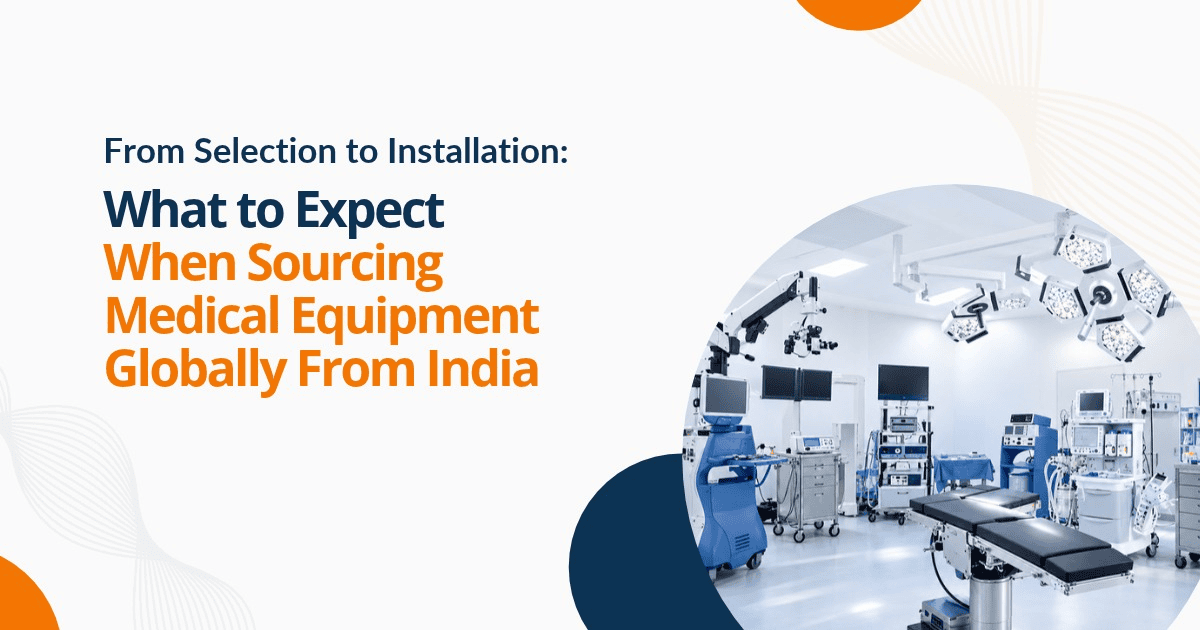
India’s medical device sector exported $4.84 billion in medical apparatus globally in 2024, and the sector is targeting $50 billion by 2030. (Ref- https://www.ibef.org/industry/medical-devices ) For international healthcare facilities, India has become a credible sourcing destination for both new and refurbished clinical equipment across cardiology, imaging, critical care, and operating room categories. The question most procurement teams ask is not whether to source from India, but what the actual process looks like from first inquiry to commissioned equipment.
This breakdown covers what international buyers should expect at each stage when working with Medinnova Systems.
Matching Equipment to Your Facility’s Clinical Requirements Before Any Order Is Placed
Most international procurement processes benefit from early technical input at this stage. Mismatches with local power specifications, clinical workflow and caseload requirements usually only become apparent after delivery.
Medinnova’s approach begins with technical consultation before any equipment is confirmed. The process covers:
- Clinical use case: what the equipment will be used for, at what volume, and in what environment
- Infrastructure compatibility: voltage, power supply specifications, room dimensions, and HVAC requirements for imaging equipment
- Regulatory compliance for the destination country: documentation requirements vary by country, and equipment selection affects what certifications apply
- Budget alignment across all equipment categories needed, not just individual line items
This stage prevents expensive mismatches that surface only after equipment arrives, is installed, and then fails to integrate with existing systems.
What International Shipping and Customs for Medical Equipment Actually Involves
Medical equipment shipped internationally is not standard freight. High-value devices such as MRI systems, heart-lung machines, and ICU ventilators require specific packaging, insurance, and documentation that need specialised handling.
Key elements of international medical equipment logistics include:
- Export documentation from India: Medinnova maintains documentation aligned with ISO 13485:2016 and ISO 9001:2015 quality management standards to support export processes. Depending on the destination country, export shipments may require a Certificate of Origin, packing certification, and equipment-specific compliance records to facilitate customs clearance and meet applicable regulatory requirements.
- Destination country customs requirements: These vary significantly by region. Middle Eastern, African, and Southeast Asian markets each have distinct import licensing frameworks for medical devices. Pre-clearance planning avoids delays at the port of entry.
- Specialized freight handling: Imaging systems and cardiac equipment require packaging specifications that prevent vibration and impact damage during transit. Temperature-sensitive components require monitored handling.
- Insurance and risk coverage: High-value medical shipments require cargo insurance that covers the replacement cost of the equipment, not just the declared shipping value.
On-Site Installation and Staff Training: What Happens After the Equipment Arrives
Delivery to the facility’s dock is not the end of the process. For most clinical equipment, commissioning involves installation, calibration, integration testing, and clinical training before the device is safe to use in patient care.
Medinnova’s biomedical engineers travel to the facility for on-site installation, verified across facilities that have worked with Medinnova.
The on-site process typically covers:
- Physical installation and integration with existing infrastructure
- Calibration and performance verification against manufacturer specifications
- Documentation of installation for local regulatory records
- Clinical staff training on operation, safety protocols, and routine maintenance
What End-to-End Medical Equipment Support Looks Like in Practice
“End-to-end” is used broadly in medical procurement. For international buyers, it should mean a single point of accountability from the initial consultation through to post-installation service, not a handover from one party to another at each stage.
Medinnova holds ISO 13485 certification, the internationally recognized quality management standard for medical device supply. This provides international buyers with an independently verified framework covering product quality, documentation, and post-market service obligations.
Post-installation, Medinnova’s service structure covers equipment maintenance, technical queries, and spare parts availability. For international facilities, post-installation support agreements should be confirmed before any order is finalized, covering response timelines, remote diagnostics capability, and on-site service availability for the destination country.
A Process That Reduces Risk at Every Stage
Sourcing medical equipment internationally from India offers access to a broad range of clinical equipment at competitive cost. What determines whether that sourcing decision delivers on its potential is the quality of the process from selection through commissioning.
Medinnova Systems provides end-to-end medical equipment sourcing support, from technical consultation and documentation aligned with ISO 13485:2016 and ISO 9001:2015 quality management standards to on-site installation and post-installation service. To discuss equipment requirements for your facility, contact Medinnova at info@medinnovasystems.com or call +91-9512-106062.